Artificial intelligence (AI) is in a period where the marketing vocabulary is consistently louder than the organizational reality. The most common mistake we observe is not that leaders select the wrong model, but that they adopt a posture treating AI as inevitable, universally beneficial, and exempt from the normal disciplines of strategy, governance, and capital allocation. This paper is a counterweight to that pull. It is neither anti-AI nor pro-AI, but pragmatic about where and how to integrate AI.
The guidance reintroduces three executive questions that should be answered before an organization builds or scales anything:
- What could we be doing with AI?
- What can we be successful at doing with AI?
- What organizational changes do we need to make to use AI effectively?
The first two explore the option space without committing to it. The third — the subject of most of this paper — addresses the organizational change required for AI adoption to succeed.
Return on X
Measuring AI solely by return on investment (ROI) predictably funds the work that is easiest to put in a spreadsheet and hardest to live with. Adoption tends to follow J-curves, and many effects of integration, such as shifts in cognitive load and changes to workflow, cannot be quantified in advance. ROI is necessary but not sufficient.
The paper introduces Return on X (RoX) as a deliberately expandable frame, asking what kind of return an organization actually cares about and what evidence would convince it that the return is real. Three lenses are developed:
- Return on Investment (ROI) — net benefits relative to cost, recognizing that the largest gains are often not the ones that generate immediate profit.
- Return on Employee (ROE) — how AI changes the value employees create relative to the effort required. AI amplifies what is already present: in healthy systems that appears as genuine gains, and in brittle systems it amplifies friction, rework, and hidden labor.
- Return on Future (ROF) — value created by investing in adaptability. Signals include a lower cost of adopting the next technology wave, reduced lock-in, and governability built in rather than added later.
Four areas of organizational alignment
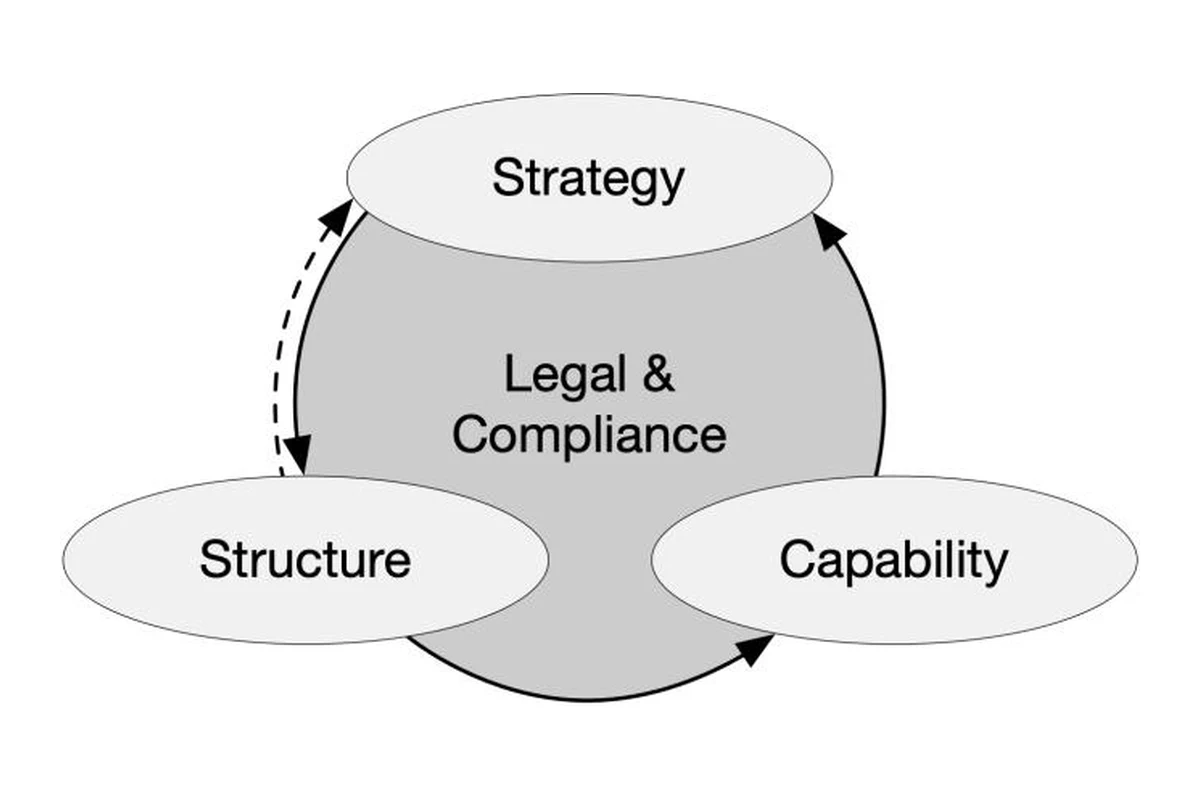
The paper then examines the four macro-level areas that must align for AI use to deliver against those returns — Strategy, Structure, Capability, and Legal and Compliance — presenting each as a challenge paired with guidance, and assessing each against all three RoX lenses.
Five implementation cases apply the framework to specific functions: commercial structure covering marketing and finance, customer service, product development, supply chain, and engineering and risk management.
A basis for a maturity model
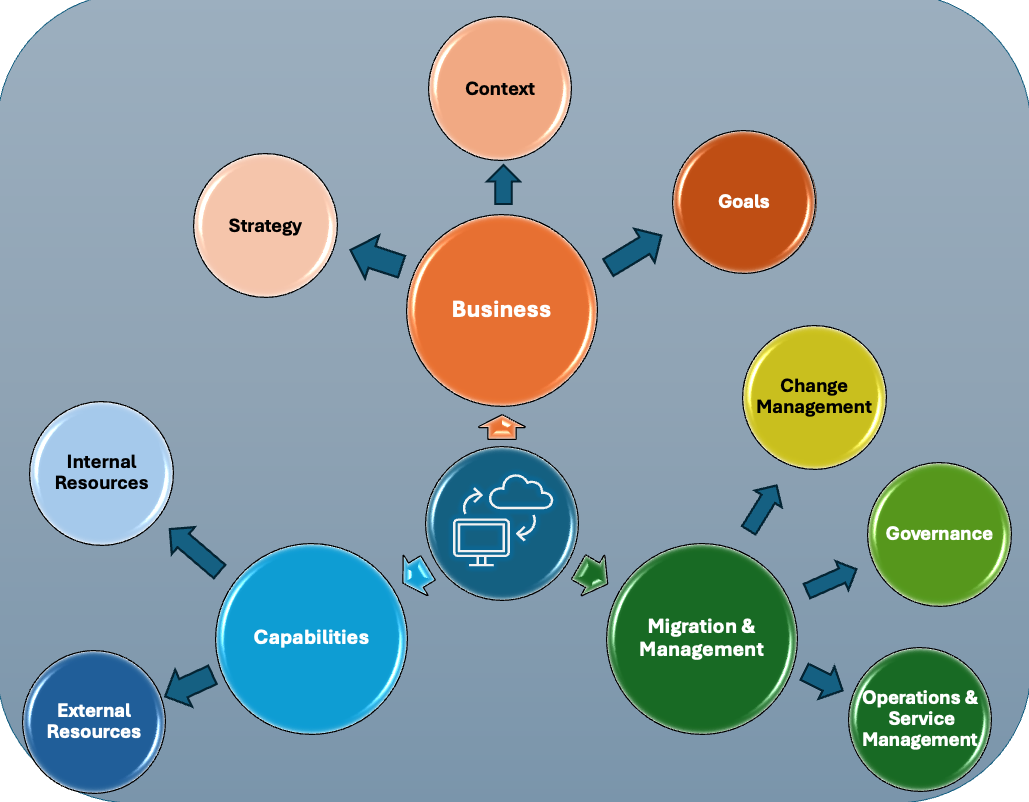
This guidance is a step toward a practical outcome: a maturity model for AI use and adoption, rooted in and building on our existing work on the Cloud Maturity Model. It also develops the position set out in our AI Responsibly position paper from 2023.
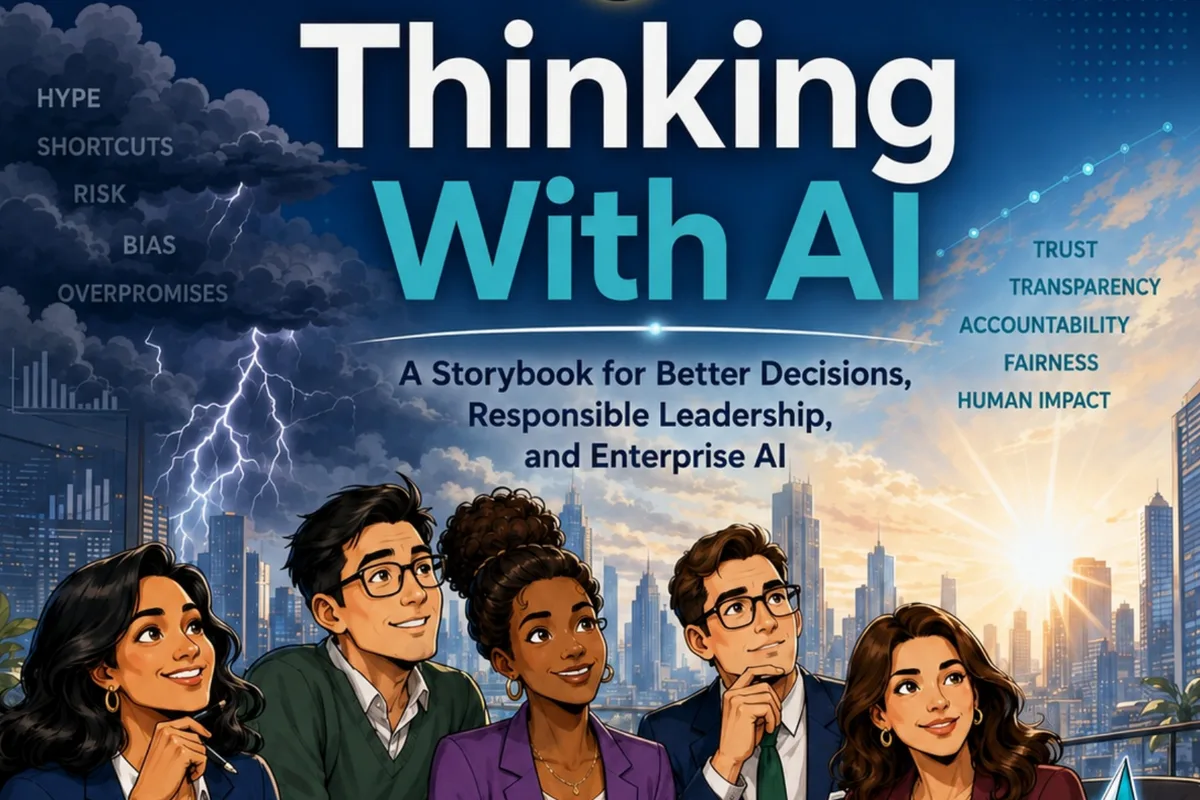
For a shorter, illustrated treatment of the same material intended for discussion among leadership teams, see the companion Thinking With AI storybook, which includes a one-page Responsible AI Leadership Checklist.
Contributors
Andre Schwan (Gijima), Harish Mekerira (Clean Harbors), Igor Andrade Araujo (Insi), Jarrod Mexted (Canadian Animal Protection Services), Mark Williams (TachTech), Matt Estes (The Walt Disney Company, retired), Roman Macak (T-Systems), Ryan Skipp (T-Systems), Shamir Charania (Clyfar Solutions), and Thomas Costello (Booz Allen Hamilton).
We welcome feedback through our contact page.
Recent Posts